

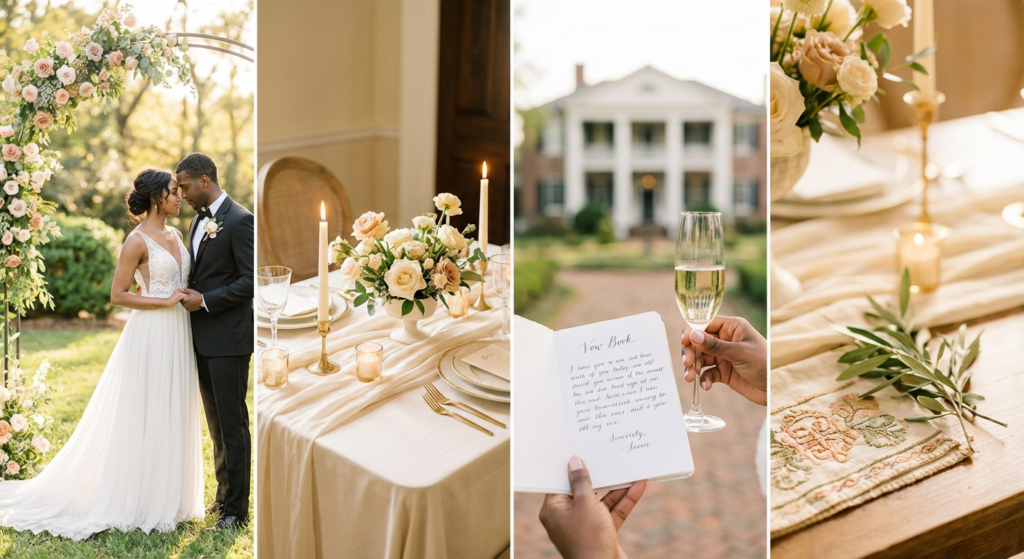
Elopement wedding planning has evolved from a last-minute courthouse decision into a curated, intentional celebration that honors your relationship on your terms—without the guest list pressure or months of logistics that traditional weddings demand.
For busy professionals in Newnan and across Georgia, elopements offer the intimacy and meaning you’re seeking while eliminating the vendor coordination overwhelm that comes with larger celebrations. Whether you’re planning from out of state or simply want to reclaim your engagement season, understanding the strategic approach to elopement planning ensures your ceremony reflects your values and heritage without sacrificing the polished execution you expect.
What Defines Modern Elopement Wedding Planning
Today’s elopements aren’t about what you’re avoiding—they’re about what you’re choosing. These intimate ceremonies typically include fewer than 20 guests (often just the couple) and focus resources on experience quality rather than guest count. The planning timeline compresses from 12-18 months to as little as 8-12 weeks, but the attention to detail remains uncompromising.
Modern elopement planning addresses three core elements:
- Venue selection that matches your vision without requiring extensive guest accommodations
- Vendor coordination scaled to intimate celebrations while maintaining professional standards
- Cultural integration that honors traditions meaningful to you, adapted for smaller gatherings
For multicultural couples, elopements provide flexibility to blend heritage elements—like a South Asian mehndi ceremony or a Hispanic lazo ritual—without navigating extended family dynamics during the planning process.
Building Your Elopement Planning Timeline
The condensed timeline of elopement wedding planning requires front-loaded decision-making. Here’s how to structure your process:
Weeks 1-2: Vision and Logistics Foundation
Establish your non-negotiables before contacting vendors. Define whether you want a mountaintop ceremony, garden setting, or architectural backdrop. Determine if you’re including witnesses, a photographer, or keeping it truly private. For couples planning from Colorado, Tennessee, or other out-of-state locations, this phase also includes researching Georgia marriage license requirements and identifying your planning point person.
Weeks 3-4: Vendor Vetting and Booking
Secure your core team: officiant, photographer, and planner if you’re delegating coordination. For elopements, vendor chemistry matters even more than large weddings—you’re working with a small team in an intimate setting. Request portfolio examples that match your aesthetic and ask specific questions about their experience with cultural ceremonies if that’s relevant to your celebration.
Weeks 5-8: Detail Execution and Rehearsal
Finalize ceremony structure, vows, and any cultural elements you’re incorporating. Confirm timeline, backup weather plans, and vendor arrival sequences. Even intimate ceremonies benefit from a walk-through, particularly if you’re incorporating rituals unfamiliar to your officiant or photographer.
Elopement Wedding Planning in Newnan: Location Considerations
Georgia’s diverse landscapes offer compelling elopement venues within an hour of metro Atlanta. When evaluating locations, consider:
Permit and access requirements: Many scenic outdoor locations require permits even for small gatherings. State parks, nature preserves, and public gardens have specific regulations about ceremonies and photography.
Seasonal timing: Spring and fall offer ideal weather, but summer humidity and winter unpredictability require contingency planning. Your planner should build weather alternatives into your timeline.
Cultural ceremony needs: If you’re incorporating rituals requiring specific setups—like a mandap structure, unity ceremonies, or traditional music—confirm your venue accommodates these elements without restrictions.
Vendor Coordination for Intimate Celebrations
Elopement vendor management differs from traditional wedding coordination. You’re not managing a cast of dozens, but the vendors you do hire carry outsized importance.
Photographer Selection
Your photographer becomes your primary witness and documentation specialist. Review their portfolio for:
- Ability to capture candid emotion in intimate settings
- Experience with diverse skin tones and cultural attire
- Comfort directing couples (you won’t have a crowd to blend into)
Officiant Partnership
For multicultural couples, your officiant must understand and respect the traditions you’re incorporating. Provide context about rituals, pronunciation guidance for names, and clarity about religious versus cultural elements. A skilled officiant adapts their ceremony structure to honor your heritage authentically.
Planning Support
Professional wedding planning services transform elopement execution from a DIY scramble into a coordinated experience. A planner handles permit acquisition, vendor communication, timeline management, and day-of coordination—allowing you to be fully present during your ceremony rather than troubleshooting logistics.
Honoring Cultural Heritage in Elopement Ceremonies
Intimate celebrations offer unique opportunities to incorporate meaningful traditions without the performance pressure of large audiences. Consider these approaches:
Ritual adaptation: Scale traditional elements to fit your setting. A full South Asian sangeet might become a private dance moment. A Hispanic arras ceremony maintains its symbolism with just the couple and officiant present.
Attire choices: Wear the cultural attire that matters to you—whether that’s a sari, ao dai, dashiki, or fusion look—without concern about guest expectations or extended family opinions.
Symbolic elements: Incorporate heritage through ceremony readings, music selections, or unity rituals that reflect your background. These elements often carry more weight in intimate settings where every detail receives full attention.
Managing Out-of-State Elopement Planning
For couples planning from distant locations, systems-based coordination prevents details from falling through gaps:
Establish a single communication channel with your planning team. Video calls replace in-person meetings for vendor selection and venue walk-throughs. Your planner becomes your on-ground representative, handling site visits, vendor meetings, and logistics you can’t manage remotely.
Build in a pre-ceremony arrival window. Plan to arrive 24-48 hours before your elopement for marriage license processing, final vendor confirmations, and location familiarity. This buffer prevents travel delays from impacting your ceremony.
Investment Considerations for Elopement Planning
Elopements shift spending from guest-count-driven expenses (catering, rentals, large venues) toward experience quality. Your investment focuses on:
- Professional photography that captures your day comprehensively
- Venue fees for exclusive or scenic locations
- Planning coordination that handles logistics you can’t manage remotely
- Cultural elements or specialty vendors (musicians, specialty officiants, custom attire)
For high-earning professionals, the value proposition centers on time reclamation and execution confidence rather than cost reduction. You’re investing in a ceremony that reflects your priorities without the months of vendor vetting and coordination that traditional weddings require.
Elopement Day Execution
Day-of coordination for elopements demands precision. With compressed timelines and small teams, there’s no buffer for delays. Your planner manages:
- Vendor arrival and setup sequencing
- Timeline adherence (particularly important for location permits with time restrictions)
- Weather contingencies and backup plan activation
- Cultural ceremony elements and ritual coordination
- Photography timeline to capture all planned moments
The goal is creating space for you to be fully present—exchanging vows, experiencing your ceremony, connecting with your partner—while someone else owns the operational details.
Why Belle Leroux Approaches Elopement Planning Differently
Belle Leroux brings healthcare-informed systems thinking to elopement coordination. We understand that busy professionals need responsive communication, clear processes, and planners who own complexity rather than defer decisions back to you. Our multicultural portfolio demonstrates our commitment to honoring diverse traditions authentically, and our coordination approach ensures nothing falls through the cracks—particularly critical for couples planning from out of state.
We handle permit acquisition, vendor vetting, cultural ceremony coordination, and day-of execution so you can focus on the meaning of your commitment rather than the mechanics of pulling it together.
Frequently Asked Questions
How far in advance should we book elopement wedding planning services?
Most couples book elopement planning 8-12 weeks before their ceremony date, though timelines can compress to 4-6 weeks if vendors are available. Earlier booking provides more venue and vendor options, particularly during peak spring and fall seasons. For couples planning from out of state, additional lead time helps coordinate site visits and vendor meetings remotely.
Can we incorporate cultural traditions into a small elopement ceremony?
Absolutely. Elopements offer flexibility to include meaningful cultural rituals—from South Asian mehndi and mandap ceremonies to Hispanic lazo or arras traditions—adapted for intimate settings. Work with your planner and officiant to identify which elements matter most to you and how to honor them authentically with a smaller setup. Many couples find cultural traditions carry more personal significance in intimate ceremonies.
What happens if weather disrupts our outdoor elopement?
Professional elopement planning includes backup location identification and weather monitoring leading up to your ceremony. Your planner should have a contingency plan established during the planning phase—whether that’s an indoor alternative at your venue, a covered structure, or a nearby backup location. The key is having decisions pre-made so weather changes trigger a plan rather than scrambling for solutions on your ceremony day.
Ready to plan an elopement that honors your relationship and heritage without the coordination overwhelm? Start your planning conversation here and let’s create a ceremony as intentional as your commitment.