
Floral artistry transforms wedding venues into immersive environments where every bloom, texture, and color choice tells the story of two people becoming one.
For couples planning celebrations in Newnan and throughout Georgia, understanding the depth and impact of intentional floral design means the difference between decorated tables and a cohesive visual experience that honors your heritage, reflects your aesthetic, and creates the atmosphere your ceremony and reception deserve. This guide walks you through everything working professionals need to know about floral artistry—from design principles and cultural considerations to logistics and investment planning.
What Floral Artistry Means for Your Wedding
Floral artistry extends far beyond centerpieces and bouquets. It’s the strategic use of botanical elements to create mood, define space, and reinforce your wedding’s visual narrative from the moment guests arrive until the final sendoff.
True floral artistry considers:
- Architectural integration: How blooms interact with your venue’s existing structure, lighting, and spatial flow
- Color theory application: Intentional palette development that photographs beautifully and complements skin tones across multicultural wedding parties
- Textural layering: Combining blooms, foliage, branches, and unexpected elements for dimensional impact
- Cultural symbolism: Incorporating flowers that carry meaning within South Asian, Hispanic, African, or mixed-heritage traditions
- Seasonal availability: Working with what’s accessible during your wedding date for optimal freshness and sustainability
The distinction between floral decoration and floral artistry lies in the approach. Decoration fills space. Artistry transforms it.
The Design Process: From Vision to Installation
Initial Consultation and Concept Development
The floral design process begins with understanding who you are as a couple. For physicians, attorneys, and corporate executives planning from out of state or managing demanding schedules, this consultation often happens virtually with mood boards, venue photos, and detailed questionnaires.
During this phase, your floral artist explores:
- Wedding style and aesthetic preferences
- Cultural elements requiring specific flowers or arrangements
- Venue characteristics and installation parameters
- Guest count and spatial requirements
- Photography priorities and timeline considerations
Proposal and Refinement
Following the consultation, you’ll receive a comprehensive proposal detailing each floral element—from ceremony installations to reception centerpieces, personal flowers, and decorative accents. This document includes design renderings, itemized pricing, and setup logistics.
Refinement happens through collaborative feedback. Perhaps the mandap design needs adjustment to incorporate family heirlooms, or the reception palette requires modification to honor both partners’ cultural backgrounds. This iterative process ensures the final design authentically represents your vision.
Sourcing and Logistics Coordination
Professional floral artistry requires relationships with growers, importers, and specialty suppliers. For multicultural weddings incorporating specific blooms—marigolds for Indian ceremonies, calla lilies for African-inspired designs, or roses in particular hues—advance sourcing becomes critical.
Your floral artist coordinates:
- Flower ordering timelines based on seasonal availability
- Backup options for weather-dependent blooms
- Delivery schedules aligned with venue access
- Rental items like vases, arches, or installation structures
- Coordination with your wedding planner, venue coordinator, and setup team
Floral Artistry Applications Throughout Your Wedding Day
Ceremony Installations
Ceremony florals establish the emotional tone for your entire celebration. These installations might include:
- Altar or mandap designs: Dramatic structures adorned with cascading blooms, fabric integration, and cultural elements
- Aisle markers: Ground arrangements, hanging installations, or petal pathways
- Entrance statements: Large-scale designs that welcome guests and signal the ceremony’s significance
- Chuppah or arch florals: Customized structures reflecting religious or cultural traditions
For outdoor ceremonies, floral artistry must account for weather variables, sunlight exposure, and natural surroundings that either complement or compete with your design.
Reception Transformations
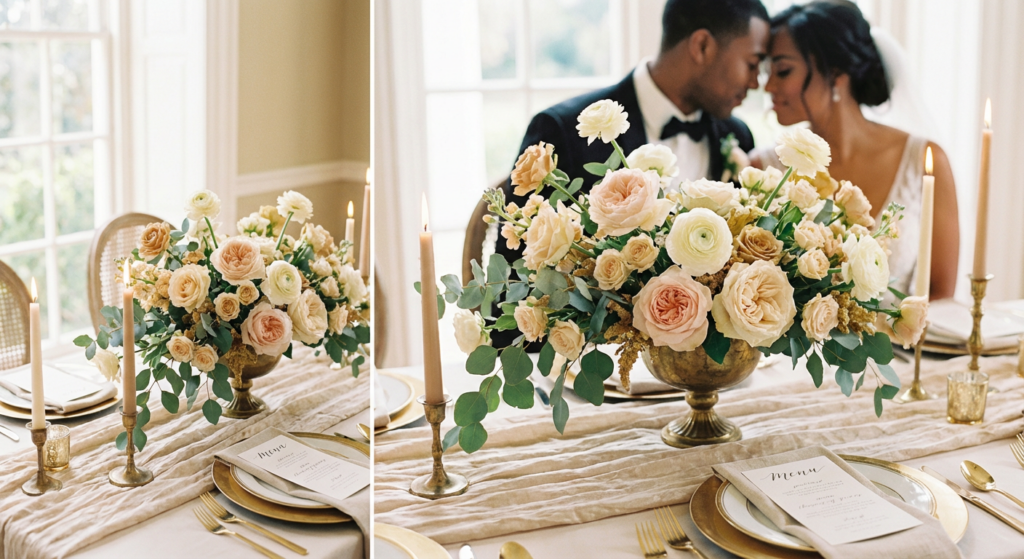
Reception florals create atmosphere across multiple zones—cocktail areas, dining spaces, dance floors, and lounge sections. Sophisticated floral artistry for receptions in Newnan and beyond considers sightlines, conversation flow, and how guests experience the space throughout the evening.
Centerpiece strategies vary based on table shape, guest interaction needs, and overall design vision:
- Elevated arrangements that allow cross-table conversation
- Low, lush designs for intimate tablescapes
- Mixed-height installations creating visual rhythm across the room
- Suspended florals that maximize table space while adding drama
Beyond centerpieces, reception floral artistry includes bar installations, cake table designs, escort card displays, lounge area accents, and restroom touches that extend your aesthetic throughout the venue.
Personal Flowers
Bouquets, boutonnieres, corsages, and flower crowns require different design considerations than installation work. These pieces must withstand hours of wear, photograph beautifully from multiple angles, and feel comfortable for the wearer.
For multicultural wedding parties, personal flowers often incorporate specific blooms or colors representing each culture. A South Asian and Hispanic fusion wedding might feature marigold accents in the bride’s bouquet alongside roses in heritage-significant hues, with coordinating boutonnieres that honor both families.
Cultural Considerations in Floral Artistry
Multicultural and interracial couples require floral artists who understand the symbolism, traditions, and aesthetic preferences across different heritages. This expertise ensures your florals honor both backgrounds authentically rather than superficially incorporating cultural elements.
South Asian weddings often feature marigolds, roses, and jasmine in mandap designs, garlands, and decorative installations. Color choices carry meaning—red and gold for prosperity, pink for new beginnings, orange for happiness.
African and African-American celebrations might incorporate bold colors, tropical blooms, and designs reflecting Afrocentric aesthetics or specific regional traditions.
Hispanic and Latinx weddings frequently feature vibrant palettes, roses, and designs that honor family traditions around unity ceremonies or religious elements.
Mixed-heritage celebrations require floral artists skilled in blending traditions cohesively—creating designs where both cultures feel represented without competing for visual dominance.
Investment and Value Considerations
Floral artistry represents a significant wedding investment, typically ranging from 8-15% of overall budgets for full-service design. For working professionals with high earning capacity, understanding this investment means recognizing what drives pricing:
- Design complexity: Custom installations require more labor than standard arrangements
- Flower selection: Imported blooms, out-of-season varieties, or specialty flowers increase costs
- Guest count and scale: Larger weddings require more materials and installation time
- Installation requirements: Venue restrictions, setup timelines, or complex structures affect labor costs
- Rental items: Vases, arches, and installation materials add to overall investment
The value proposition lies in cohesive visual impact, cultural authenticity, and the peace of mind that comes from working with experienced professionals who handle complexity so you don’t have to.
Working with Belle Leroux for Floral Artistry in Newnan
Belle Leroux brings systems-driven precision to floral artistry, combining healthcare-background process confidence with warm, empowering client relationships. Our approach centers multicultural couples, ensuring every design choice honors your heritage while creating the sophisticated, flawlessly executed celebration you envision.
We handle vendor coordination, timeline management, and the logistical complexity that working professionals planning from out of state or managing demanding careers simply don’t have time to navigate. From initial consultation through final installation, our wedding planning services provide the responsive communication and end-to-end ownership that transforms wedding planning from overwhelming to empowering.
Ready to explore how floral artistry can transform your wedding vision into reality? Schedule your consultation and let’s create something extraordinary together.
FAQ
How far in advance should we book our floral artist?
Book your floral artist 8-12 months before your wedding date, particularly for peak season celebrations or weddings requiring specialty blooms for cultural traditions. This timeline allows for thorough design development, sourcing of specific flowers, and coordination with your broader vendor team. For destination weddings or out-of-state planning, earlier booking provides additional time for virtual consultations and design refinement.
Can floral artistry incorporate flowers from both our cultural backgrounds?
Absolutely. Skilled floral artists specialize in blending cultural elements cohesively, creating designs where both heritages feel authentically represented. This might mean incorporating marigolds and roses together, using color palettes that honor both traditions, or creating separate ceremony and reception designs that each highlight different cultural aesthetics. The key is working with professionals experienced in multicultural weddings who understand symbolism and tradition beyond surface-level incorporation.
What happens if our preferred flowers aren’t available for our wedding date?
Professional floral artists develop backup options during the design phase, identifying alternative blooms that achieve similar visual impact and cultural significance. Seasonal availability guides initial recommendations, but weather events, supply chain issues, or import restrictions sometimes require pivoting. Your floral artist should present alternatives that maintain your design vision’s integrity while working within availability constraints—this is where experience and supplier relationships become invaluable.