

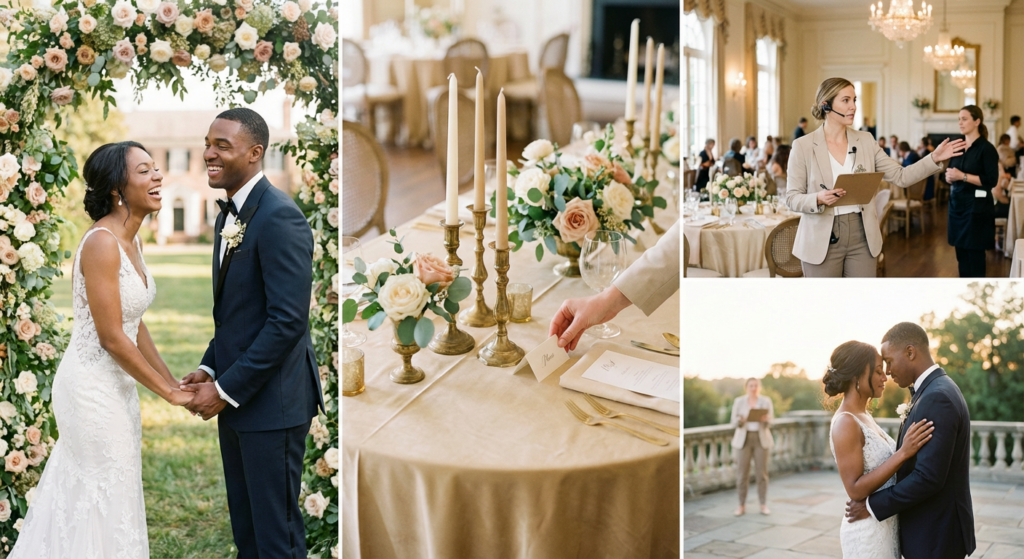
Every couple deserves to enjoy their wedding day instead of managing it—and that’s exactly what day-of coordination delivers.
You’ve spent months selecting your venue, tasting cakes, and finalizing your guest list. You’ve negotiated contracts, designed your ceremony program, and chosen every detail with intention. But when your wedding day arrives, someone needs to execute that vision while you’re getting ready, walking down the aisle, and celebrating with the people you love. That’s where professional day-of coordination becomes essential—especially for couples in Newnan, GA and the surrounding Atlanta metro who’ve invested significant time into planning but need expert hands to bring it all together.
Belle Leroux specializes in transforming your carefully crafted plans into a seamlessly executed celebration, allowing you to be fully present for every moment.
What Day-of Coordination Actually Includes
Despite the name, day-of coordination begins weeks before your wedding. This service ensures every vendor, timeline detail, and logistical element aligns precisely as you envisioned.
Timeline Development & Refinement
Your coordinator reviews all vendor contracts, ceremony elements, and reception programming to build a comprehensive timeline. This document becomes the roadmap for your entire team—from hair and makeup arrival times to last dance and venue departure.
Vendor Communication & Confirmation
In the final weeks, your coordinator contacts every vendor to confirm arrival times, delivery details, setup requirements, and specific instructions. This eliminates the dozens of emails and calls that would otherwise land in your inbox during an already busy time.
Ceremony Rehearsal Management
Your coordinator runs the rehearsal, positioning your wedding party, cueing processional order, and walking through ceremony logistics. This ensures everyone knows where to stand, when to walk, and how the ceremony flows.
Wedding Day Execution
On your wedding day, your coordinator arrives early to oversee vendor arrivals, direct setup, troubleshoot any issues, and manage the timeline from start to finish. You won’t field a single vendor question or logistical concern.
Day-of Coordination in Newnan: Why Timing Matters
For couples planning weddings in the Newnan area—whether at historic downtown venues, private estates, or outdoor locations throughout Coweta County—day-of coordination addresses the unique challenges of executing events in spaces that may not have built-in coordination staff.
Many beautiful venues offer the space but not the staffing to manage your wedding timeline. Your caterer focuses on food service, your photographer captures moments, and your DJ manages music—but none of them are responsible for ensuring your ceremony starts on time, your family knows where to sit, or your reception transitions smoothly from cocktail hour to dinner.
A professional coordinator fills that gap, serving as the central point of contact and decision-maker so your wedding operates like the well-planned event it is.
The Real Value: What You’re Actually Paying For
When couples question the investment in day-of coordination, they’re often thinking about the visible eight to ten hours on the wedding day itself. The actual value extends far beyond that window.
Systems & Process Management
Professional coordinators bring established systems for timeline creation, vendor management, and contingency planning. This isn’t improvisation—it’s a proven process applied to your specific event.
Vendor Relationship Navigation
Coordinators know how to communicate with vendors in their language, understanding setup requirements, technical needs, and industry standards. This fluency prevents miscommunication and ensures your team works cohesively.
Real-Time Problem Solving
Issues arise at every wedding—a vendor runs late, weather shifts, a family member needs assistance. Your coordinator handles these situations immediately, often before you’re aware they existed.
Cultural & Traditional Coordination
For multicultural couples incorporating multiple ceremony traditions, specific rituals, or cultural elements, a coordinator ensures proper timing, positioning, and respect for each component. This is particularly valuable when blending South Asian, Black, Hispanic, or other cultural traditions into your celebration.
What Day-of Coordination Doesn’t Cover
Understanding the scope helps set appropriate expectations and determine if this service level matches your needs.
Day-of coordination typically doesn’t include:
- Venue or vendor research and selection
- Contract negotiation or budget management
- Design concept development or decor sourcing
- Invitation design or guest list management
- Month-of planning tasks like seating chart creation or final vendor selections
If you need support with these elements, full-service wedding planning provides comprehensive assistance from engagement through your wedding day.
How to Maximize Your Day-of Coordination Investment
Finalize Major Decisions Early
Your coordinator needs completed vendor contracts, finalized ceremony details, and confirmed reception programming at least 4-6 weeks before your wedding. The more organized your information, the more effectively your coordinator can execute.
Communicate Cultural & Family Dynamics
Share important context about family relationships, cultural traditions, or specific sensitivities. This information helps your coordinator navigate interpersonal dynamics and honor what matters most to you.
Trust the Process
Once you’ve handed off coordination responsibilities, resist the urge to manage vendors directly. Funneling all communication through your coordinator prevents conflicting information and ensures consistent execution.
Designate a Point Person for Personal Items
Your coordinator manages vendors and timeline—but someone from your wedding party should handle personal items like your emergency kit, cards and gifts, and family heirlooms. Clarify these responsibilities in advance.
When to Book Day-of Coordination
Most coordinators book 8-12 months in advance, particularly for peak wedding season (April through October in Georgia). If you’re planning a wedding during high-demand months or holiday weekends, secure your coordinator as early as possible.
For couples planning from out of state—whether you’re relocating to the Atlanta area or hosting a destination wedding for family in Georgia—day-of coordination becomes even more valuable. You won’t be local to handle last-minute vendor meetings or venue walkthroughs, making professional coordination essential for smooth execution.
Making the Decision
Day-of coordination serves couples who’ve enjoyed the planning process but recognize they can’t execute their own wedding while simultaneously experiencing it. This service works particularly well for organized, detail-oriented professionals who’ve managed the planning but need expert hands for implementation.
If you’ve invested months into creating a meaningful celebration that honors your relationship and heritage, professional coordination ensures that vision translates into reality. Your wedding day happens once—and you deserve to be fully present for it.
Ready to hand off the logistics and step into your celebration with confidence? Connect with our team to discuss how day-of coordination supports your wedding vision.
FAQ
How is day-of coordination different from a venue coordinator?
Venue coordinators represent the venue’s interests—managing their space, enforcing their policies, and coordinating their preferred vendors. A private day-of coordinator represents you, managing your entire vendor team, executing your specific timeline, and ensuring your vision comes to life regardless of venue. Many couples need both: the venue coordinator for facility logistics and a private coordinator for comprehensive wedding management.
When does day-of coordination actually start?
Despite the name, professional day-of coordination typically begins 4-6 weeks before your wedding. This includes timeline creation, vendor confirmation calls, rehearsal management, and wedding day execution. Some coordinators offer extended timelines starting 8-10 weeks out for more complex weddings or couples who need additional planning support.
Can a day-of coordinator help with multicultural wedding traditions?
Yes—experienced coordinators work with couples to understand, respect, and properly execute cultural traditions and rituals. This includes timing considerations for multiple ceremonies, coordinating cultural attire changes, managing traditional elements like tea ceremonies or jumping the broom, and ensuring family members understand their roles in cultural rituals. Communication about these elements should happen during your initial planning meetings so your coordinator can build appropriate time and logistics into your wedding timeline.