
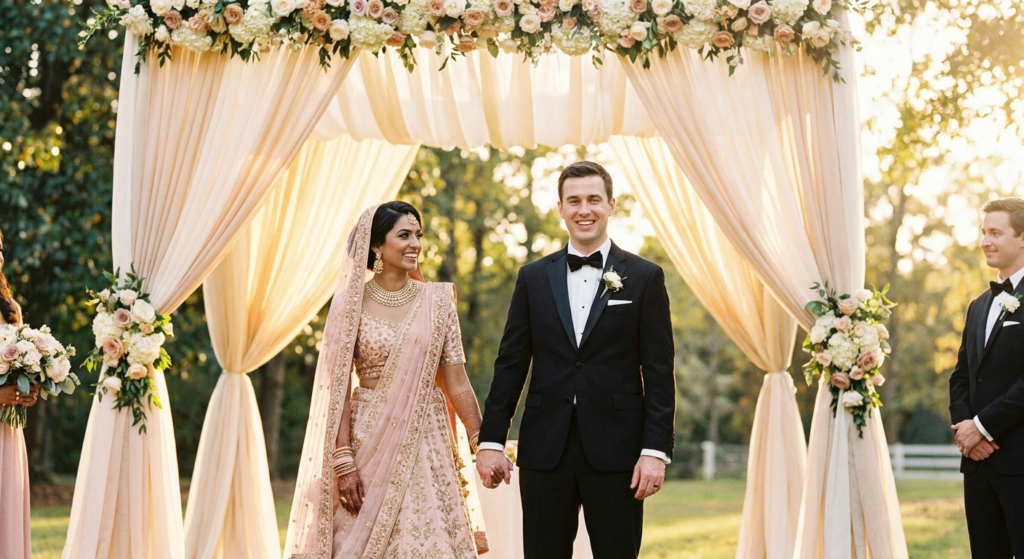
Every couple deserves a wedding celebration that honors both sides of their story—but when your traditions span continents, languages, and customs, coordinating those details without expert guidance can quickly become overwhelming.
Multicultural wedding planning requires more than a checklist and a timeline. It demands cultural fluency, vendor coordination across multiple ceremony styles, and a planner who understands that blending traditions isn’t about compromise—it’s about creating something beautifully whole. For couples in Newnan and across North Georgia, finding a planning partner who can navigate this complexity while respecting every cultural nuance makes all the difference between a ceremony that feels fragmented and one that feels seamlessly yours.
The Hidden Complexity of Multicultural Celebrations
Blending two cultural backgrounds into one cohesive wedding day involves layers most couples don’t anticipate until they’re deep in the planning process. The logistics multiply quickly: coordinating timing for a Hindu ceremony followed by a Christian reception, sourcing vendors who understand the significance of a jumping the broom tradition, or ensuring your caterer can execute both Nigerian jollof rice and Southern barbecue to authentic standards.
These aren’t details you can delegate to a coordinator who shows up the week before your wedding. They require a planner embedded in the process from engagement forward—someone who asks the right questions about your family’s expectations, understands the non-negotiable elements of each tradition, and builds a vendor team capable of executing both with equal care.
What Makes Multicultural Wedding Planning Different
Cultural Competency Beyond Surface-Level Gestures
True multicultural planning goes deeper than adding a unity ceremony or playing music from both backgrounds. It means understanding:
- The order and timing requirements for religious or cultural rituals
- Which family members traditionally participate in specific ceremonies
- Dietary restrictions and preparation methods that honor religious observances
- Attire changes, blessing ceremonies, and symbolic elements that carry deep meaning
- How to communicate these requirements to vendors who may be unfamiliar with certain traditions
A planner experienced in multicultural weddings anticipates these needs before you have to explain them. They’ve already built relationships with vendors who respect and understand diverse traditions, eliminating the exhausting work of educating every florist, caterer, and photographer about why certain elements matter.
Vendor Vetting With Cultural Intelligence
Not every vendor is equipped to serve a multicultural celebration well. The photographer needs to understand which moments are ceremony-critical across both traditions. The caterer must execute authentic dishes from multiple cuisines without cutting corners. The officiant should be comfortable weaving together elements from different faith backgrounds if that’s your vision.
Vetting vendors for this level of capability takes time most working professionals don’t have. When you’re managing a demanding career and planning from out of state, you need a planner who’s already done this work—who knows which Atlanta-area vendors have successfully executed South Asian ceremonies, which caterers understand the importance of halal or kosher preparation, and which venues can accommodate the space and timing needs of multi-ceremony celebrations.
How Belle Leroux Approaches Multicultural Wedding Planning in Newnan
Our process is built on the understanding that your wedding should reflect both families’ heritage without either side feeling like an afterthought. We start by listening—to your vision, your family’s expectations, and the traditions that matter most to you both. Then we build a comprehensive plan that honors every element.
Discovery and Cultural Mapping
Before we touch a timeline or contact a vendor, we map out the cultural landscape of your celebration. This includes:
- Identifying must-have traditions from both backgrounds
- Understanding family dynamics and who needs to be involved in planning decisions
- Clarifying religious or cultural requirements that impact vendor selection
- Determining whether you’re blending traditions within single ceremonies or hosting separate events
This foundation ensures nothing gets overlooked as planning progresses.
Strategic Vendor Partnerships
We’ve cultivated relationships with vendors across the Southeast who bring both technical excellence and cultural awareness to their work. Our wedding planning services include full vendor management, which means we handle all communication, ensure your cultural requirements are understood and respected, and coordinate timing across multiple ceremony elements.
For couples planning from Colorado, Tennessee, or other out-of-state locations, this vendor coordination becomes even more critical. You shouldn’t have to fly in multiple times to meet with caterers or tour venues—we handle those conversations, send you detailed recaps with photos and recommendations, and ensure every vendor is aligned with your vision before contracts are signed.
Timeline Architecture for Complex Ceremonies
Multicultural weddings often involve more moving parts than traditional single-ceremony celebrations. A Hindu ceremony might require three hours before the reception begins. A traditional Chinese tea ceremony needs private space and specific timing. We build timelines that accommodate these requirements while keeping your guests engaged and your day flowing smoothly.
This isn’t about rushing through meaningful moments to stay on schedule—it’s about designing a schedule that gives each tradition the time and space it deserves.
When to Bring in a Multicultural Wedding Planner
The earlier you engage a planner, the more seamlessly your vision comes together. Ideally, you’ll want to start working with a planner shortly after your engagement, especially if:
- You’re planning from out of state and can’t easily visit vendors or venues
- Your families have strong expectations about specific traditions or ceremony elements
- You’re blending traditions that require specialized vendors or unique venue capabilities
- You have a demanding career that limits your availability for vendor meetings and coordination
- You want a planner who can educate vendors about your cultural requirements rather than you having to do that work
Starting early gives your planner time to secure the right vendors, design a thoughtful timeline, and build in the flexibility needed when coordinating across multiple cultural traditions.
Your Celebration, Fully Honored
Multicultural wedding planning is about more than logistics—it’s about creating a celebration where both families see themselves reflected, where traditions are honored with authenticity, and where you can be fully present instead of managing details. When you work with a planner who understands this complexity, you gain a partner who handles the coordination so you can focus on what matters: celebrating your love story with everyone who helped shape it.
Ready to start planning a celebration that honors every part of your heritage? Schedule your consultation with Belle Leroux and let’s build something beautifully yours.
FAQ
How far in advance should we hire a multicultural wedding planner?
Ideally, engage a planner within 2-3 months of your engagement, especially if your celebration involves multiple ceremonies or specialized vendors. This timeline allows your planner to secure vendors with cultural expertise, design a comprehensive timeline, and coordinate details that require advance preparation. For destination or out-of-state couples, early engagement is even more valuable since your planner handles vendor meetings and site visits on your behalf.
What if our families have different expectations about wedding traditions?
An experienced multicultural planner serves as a bridge between families, helping facilitate conversations about which traditions are non-negotiable and how to blend elements in ways that honor both sides. We’ve navigated everything from timing conflicts between religious ceremonies to menu planning that respects multiple dietary traditions. Our role is to find solutions that make both families feel seen and respected throughout your celebration.
Do we need separate vendors for different cultural elements of our wedding?
Not necessarily. Part of our vendor vetting process involves identifying professionals who can authentically execute multiple cultural traditions. However, for certain specialized elements—like a traditional Indian mehndi artist or a specific type of cultural entertainment—we’ll bring in experts who specialize in those services. We coordinate all vendors to ensure seamless collaboration regardless of how many are involved in your celebration.