

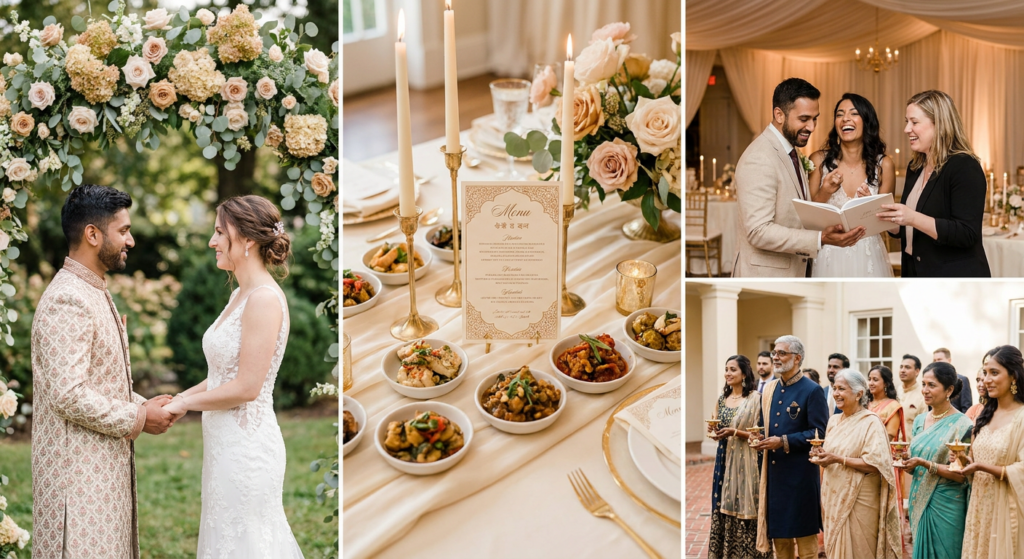
Multicultural wedding planning requires more than a vendor list and a timeline—it demands cultural fluency, logistical precision, and a planner who understands that honoring two (or more) heritages isn’t optional.
For couples in Newnan and across the Atlanta metro, blending traditions means navigating everything from ceremony structure and attire changes to menu design and family expectations. When you’re managing a full-time career, coordinating from out of state, or simply don’t have the bandwidth to vet vendors who truly understand your vision, a structured approach becomes essential.
This checklist walks you through the core planning phases, cultural considerations, and vendor coordination strategies that keep multicultural celebrations seamless—from engagement to sendoff.
Phase 1: Define Your Cultural Vision Early
Before you book a single vendor, get clear on which traditions matter most. This isn’t about pleasing everyone—it’s about identifying the non-negotiables that make your celebration authentically yours.
Start with these questions:
- Which ceremonies are essential? (e.g., Hindu ceremony + Christian ceremony, tea ceremony, jumping the broom, arras exchange)
- What attire changes will you need, and when?
- Are there specific rituals that require timing considerations? (e.g., muhurat timing, hora loca, grand entrance choreography)
- Which family members need specific roles, and what cultural protocols apply?
Document your answers. Share them with your planner early. This becomes the foundation for your timeline, vendor briefs, and day-of coordination.
Phase 2: Assemble a Vendor Team with Cultural Competency
Not every vendor has experience with multicultural weddings. The difference shows up in how they handle everything from menu tastings to ceremony transitions.
Vet vendors using these criteria:
- Portfolio proof: Ask to see full galleries from multicultural weddings, not just highlight reels
- Flexibility: Can they accommodate multiple ceremony structures, extended timelines, or non-traditional formats?
- Communication style: Do they ask questions about your traditions, or assume they already know?
- Vendor relationships: Do they have established connections with specialty providers (e.g., henna artists, cultural musicians, specialty caterers)?
Your planner should handle this vetting process. If you’re doing it solo, expect to invest significant time in consultations and follow-up.
Phase 3: Build a Timeline That Honors Both Traditions
Multicultural weddings often require extended timelines. A single-ceremony reception might run four hours; a multi-ceremony celebration can span six to eight hours or multiple days.
Timeline essentials:
- Ceremony sequencing: Determine whether ceremonies happen back-to-back, on separate days, or with a break in between
- Attire changes: Build in 20–30 minutes per outfit change, including touch-ups and photos
- Meal service: Consider whether you’re serving multiple cuisines family-style, buffet, or plated—and how that affects timing
- Cultural performances: Block time for specific dances, rituals, or entertainment that can’t be rushed
Work backward from your venue’s end time. If your timeline feels tight, it probably is. Adjust ceremony start times or consider a multi-day format.
Multicultural Wedding Planning in Newnan: What to Expect
Couples planning from Newnan, North Georgia, or out of state need a planner who can manage vendor coordination without requiring you to be on-site for every decision. That means clear systems, proactive communication, and a team that understands how to translate your vision into actionable vendor briefs.
Multicultural wedding planning requires a planner who brings both cultural awareness and operational rigor—someone who can coordinate a baraat procession and a church processional with equal confidence.
Phase 4: Coordinate Family Expectations and Roles
Family dynamics add complexity to any wedding. In multicultural celebrations, you’re often balancing different expectations around involvement, hosting responsibilities, and ceremonial roles.
Set boundaries early:
- Clarify who is hosting (financially and ceremonially)
- Define decision-making authority for key elements (venue, menu, guest list)
- Assign specific roles to family members who want to be involved
- Communicate decisions through a single point of contact when possible
Your planner can serve as a buffer, fielding questions and managing logistics so you’re not caught in the middle of conflicting opinions.
Phase 5: Design a Menu That Reflects Both Heritages
Food is one of the most visible expressions of culture at a wedding. A thoughtful menu honors both backgrounds without overwhelming guests or creating logistical chaos.
Menu planning strategies:
- Fusion approach: Blend flavors and techniques from both cultures into a cohesive menu
- Dual service: Offer distinct stations or courses representing each heritage
- Family-style: Serve a variety of dishes that allow guests to sample both cuisines
- Dietary accommodations: Ensure vegetarian, vegan, halal, or kosher options are clearly labeled and abundant
Work with a caterer who has experience with your specific cuisines. Tastings should include full portions, not just samples, so you can assess quality and presentation.
Phase 6: Communicate Your Vision to Vendors
Even experienced vendors need context. A detailed brief ensures everyone understands not just what you want, but why it matters.
Include in your vendor briefs:
- Cultural significance of specific rituals or elements
- Pronunciation guides for names, terms, or ceremonial language
- Timing requirements that can’t be adjusted
- Visual references (photos, mood boards, examples from other weddings)
Your planner should distribute these briefs and confirm that vendors have reviewed them. Day-of surprises happen when vendors don’t understand the cultural context.
Phase 7: Plan for Day-Of Coordination Complexity
Multicultural weddings require more hands-on coordination than single-tradition celebrations. Your coordinator needs to manage ceremony transitions, cue cultural performances, and ensure rituals happen in the correct sequence.
Day-of essentials:
- Detailed run-of-show with cues for each ritual
- Backup plans for outdoor ceremonies or weather-dependent elements
- Designated point person for each family or cultural tradition
- Clear communication plan between planner, vendors, and venue staff
This isn’t the time to rely on a venue coordinator who’s never managed a multicultural wedding. You need someone who can anticipate complications and adjust in real time.
Why Belle Leroux Brings Systems to Multicultural Celebrations
Belle Leroux’s approach combines cultural fluency with the operational precision that comes from a healthcare background. We don’t just coordinate vendors—we build systems that ensure every tradition is honored, every transition is seamless, and every detail reflects your vision.
From initial consultation through final sendoff, we manage the complexity so you can focus on what matters: celebrating with the people you love.
Frequently Asked Questions
How far in advance should we start planning a multicultural wedding?
Most multicultural weddings require 12–18 months of planning, especially if you’re incorporating multiple ceremonies, specialty vendors, or custom elements. Starting early gives you time to vet vendors with cultural competency, secure venues that can accommodate extended timelines, and coordinate family involvement without rushing decisions.
Do we need separate vendors for each cultural tradition?
Not necessarily. Some vendors have experience across multiple traditions and can handle blended celebrations. Others specialize in specific cultural elements (e.g., henna artists, cultural musicians, specialty caterers). Your planner should assess which vendors can handle multiple aspects and where you need specialists to ensure authenticity and quality.
How do we handle guests who aren’t familiar with our cultural traditions?
Consider creating a ceremony program that explains key rituals, their significance, and what guests can expect. You can also have your officiant provide brief context during transitions. For receptions, signage at food stations or a welcome note can help guests navigate unfamiliar elements. The goal is to make everyone feel included without over-explaining or diluting the cultural significance.
Ready to plan a celebration that honors every part of your story? We bring the cultural fluency and logistical systems that make multicultural weddings seamless. Start your planning process here.