

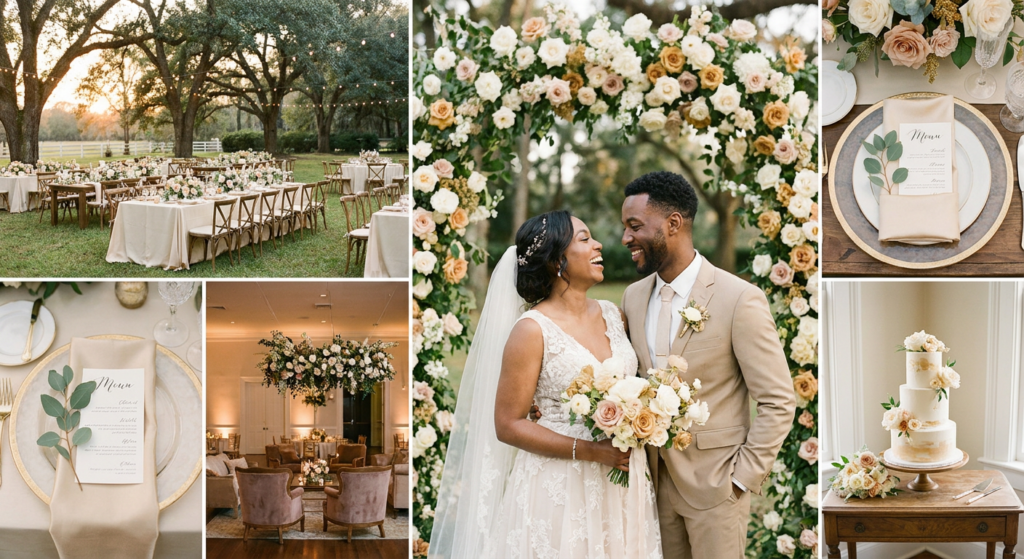
Every wedding tells a story—and wedding design is the visual language that brings yours to life.
From the moment your guests arrive at your ceremony to the final dance at your reception, every color, texture, and detail works together to create an atmosphere that reflects who you are as a couple. For busy professionals planning celebrations in Newnan, GA and beyond, understanding what wedding design encompasses—and how it differs from simple decoration—can transform your vision from Pinterest boards into a cohesive, unforgettable experience.
What Wedding Design Actually Includes
Wedding design goes far beyond centerpieces and linens. It’s a comprehensive approach that considers every visual and sensory element of your celebration.
Core Design Elements:
- Color palette development and application across all touchpoints
- Spatial planning and guest flow throughout your venue
- Lighting design (ambient, accent, and architectural)
- Floral concepts and installation styles
- Furniture selection and lounge area curation
- Textile choices (linens, napkins, runners, drapery)
- Tabletop styling (place settings, glassware, chargers)
- Signage and paper goods integration
- Ceremony backdrop and altar design
- Reception entrance and focal point creation
The distinction matters: decoration fills space, while design creates intentional atmosphere. A skilled planner approaches each element as part of a larger narrative, ensuring your venue transformation feels cohesive rather than collected.
How Wedding Design Honors Cultural Heritage
For multicultural and interracial couples, wedding design becomes a powerful tool for storytelling. The visual elements of your celebration can honor multiple traditions simultaneously without feeling disjointed or forced.
Cultural Integration Through Design:
Color symbolism: Incorporating meaningful hues from different traditions (red for Chinese celebrations, gold for South Asian ceremonies, jewel tones for African heritage)
Textile representation: Using fabrics like kente cloth, sari silk, or traditional embroidery patterns in unexpected applications—table runners, napkin details, or lounge furniture
Ceremonial space design: Creating distinct visual moments for different ritual elements, whether that’s a mandap, chuppah, or unity ceremony backdrop
Reception transitions: Designing spaces that evolve throughout the evening, reflecting the blend of cultures you’re celebrating
The goal isn’t to create separate “his” and “hers” sections, but to weave traditions together into something that feels authentically yours. This requires both cultural knowledge and design expertise—understanding which elements carry deep meaning and which offer flexibility for creative interpretation.
The Wedding Design Process: From Vision to Venue Transformation
Professional wedding design follows a systematic approach that protects your investment and ensures execution matches expectation.
Discovery and Concept Development
The process begins with understanding your story, aesthetic preferences, and non-negotiables. This phase includes:
- Inspiration gathering and mood board refinement
- Venue walkthrough and spatial assessment
- Budget allocation across design categories
- Timeline development for design decisions
Design Proposal and Refinement
Once the concept is established, you’ll receive detailed proposals that include:
- Rendered floor plans showing furniture placement and guest flow
- Color swatches and material samples
- Floral concepts with seasonal considerations
- Lighting plans and technical requirements
- Itemized design budget with vendor recommendations
This is where the value of experience becomes evident. A planner who understands vendor capabilities, venue limitations, and logistical realities can guide you toward choices that photograph beautifully and function flawlessly.
Vendor Coordination and Installation Oversight
Design execution requires orchestrating multiple vendors—florists, rental companies, lighting technicians, and more. Your planner manages:
- Vendor communication and design specification sharing
- Delivery schedules and setup timelines
- Installation supervision and styling adjustments
- Strike coordination (teardown after your celebration)
For couples planning from out of state or managing demanding careers, this coordination eliminates the need for dozens of individual vendor conversations and site visits.
Wedding Design Investment: What Influences Cost
Understanding design pricing helps you make informed decisions aligned with your priorities.
Factors That Shape Design Investment:
Guest count and venue size: Larger spaces require more elements to create visual impact
Floral density and seasonality: Lush installations and out-of-season blooms increase costs
Rental needs: Venues with limited in-house inventory require more external rentals
Lighting complexity: Basic uplighting versus custom gobo projections and chandeliers
Installation labor: Intricate designs require more setup time and specialized skills
Customization level: Bespoke elements (custom signage, specialty linens, unique furniture) versus catalog selections
Rather than approaching design with a predetermined number, consider allocating 15-20% of your overall wedding budget to design and florals. This allows for meaningful visual impact while maintaining balance across all celebration elements.
Wedding Design for Atlanta Metro and Destination Celebrations
Whether you’re celebrating at a historic venue in Newnan, GA, a mountain estate in North Georgia, or a destination location in Colorado, design principles adapt to setting and season.
Venue-Specific Design Considerations:
Historic estates and gardens: Enhancing existing architecture without competing with it
Blank canvas spaces: Building atmosphere from the ground up with intentional design layers
Outdoor celebrations: Accounting for natural lighting changes and weather contingencies
Destination venues: Working with local vendors while maintaining design cohesion
Belle Leroux specializes in translating your vision across different venue types and locations, ensuring design integrity whether you’re planning locally or from across the country. Our wedding planning services include comprehensive design development and vendor coordination that removes the guesswork from the process.
When to Finalize Your Wedding Design
Design decisions follow a natural timeline that protects availability and allows for thoughtful choices.
12-10 months before: Establish overall design concept and color palette
10-8 months before: Finalize major rental needs (furniture, tents, specialty items)
8-6 months before: Confirm floral concept and book florist
6-4 months before: Finalize linens, tabletop details, and lighting plans
3-2 months before: Complete paper goods and signage designs
1 month before: Final design walkthrough and installation timeline confirmation
Starting early doesn’t mean making all decisions immediately—it means having the framework in place so individual choices build on each other rather than feeling scattered or reactive.
FAQ
What’s the difference between a wedding designer and a wedding planner?
A wedding designer focuses exclusively on the visual and aesthetic elements of your celebration, while a full-service planner handles design alongside logistics, vendor management, timeline creation, and day-of coordination. Many planners incorporate design services, offering end-to-end support that ensures your vision is both beautiful and flawlessly executed.
Can wedding design incorporate multiple cultural traditions without looking cluttered?
Absolutely. Skilled design integration focuses on finding common threads between traditions—complementary color palettes, shared symbolic elements, or transitional moments throughout your celebration. The key is intentional layering rather than literal representation of every tradition, creating visual cohesion that honors your heritage without overwhelming the space.
How far in advance should we book our wedding planner for design services?
Ideally 12-18 months before your wedding date, especially if you’re celebrating during peak season (April-June, September-October) or have specific vendor preferences. This timeline allows for thoughtful design development, vendor availability, and the ability to source specialty items. However, experienced planners can work with shorter timelines when needed, adjusting the process to meet your date.
Ready to transform your wedding vision into reality? Belle Leroux brings systems-driven expertise and cultural fluency to every celebration we design. From concept development to installation oversight, we handle the complexity so you can focus on what matters most. Start the conversation about your wedding design and discover how intentional design creates celebrations that feel unmistakably yours.