

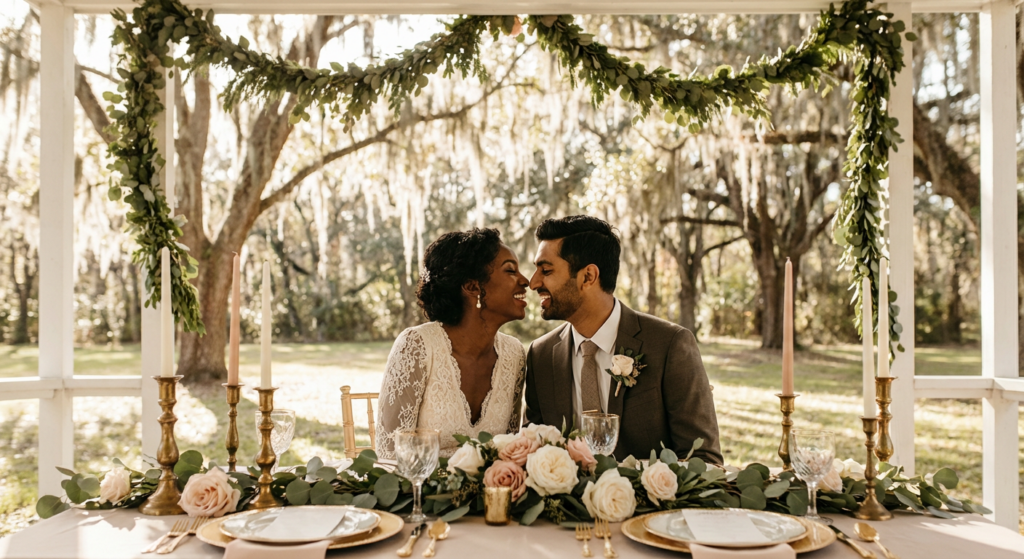
Every couple planning a wedding deserves a celebration that reflects who they are—but coordinating vendors, timelines, and cultural traditions while managing a demanding career requires more than a checklist.
Full wedding planning transforms the engagement period from a logistical marathon into an experience you can actually enjoy. For busy professionals in Newnan and across Georgia, this comprehensive service means partnering with a planner who manages every detail from venue selection to final sendoff. Belle Leroux specializes in this end-to-end approach, bringing healthcare-trained precision to multicultural celebrations that honor heritage while delivering flawless execution.
What Full Wedding Planning Actually Includes
Unlike day-of coordination or partial planning, full wedding planning begins the moment you’re engaged. This service encompasses:
- Venue research and contract negotiation – Your planner identifies locations that align with your vision, guest count, and cultural requirements, then reviews contracts to protect your interests
- Vendor sourcing and management – From caterers who understand dietary customs to florists who can execute specific color palettes, your planner vets professionals and coordinates all communication
- Budget development and tracking – A detailed financial roadmap shows where funds are allocated, with real-time updates as decisions are made
- Design conceptualization – Mood boards, color stories, and spatial planning that weave cultural elements into a cohesive aesthetic
- Timeline creation – Master schedules for planning milestones, vendor deliveries, ceremony sequences, and reception flow
- Guest experience planning – Welcome events, transportation logistics, accommodation blocks, and cultural program elements
- Day-of orchestration – Complete management of setup, vendor arrivals, ceremony cues, and reception transitions
This comprehensive approach means one point of contact owns the entire process, eliminating the fragmentation that occurs when couples coordinate multiple vendors independently.
How to Choose a Full Wedding Planner in Newnan
Evaluate Cultural Competency
Review portfolio work that demonstrates experience with your specific traditions. Look for planners who showcase multicultural ceremonies—South Asian baraat processions, African American jumping the broom rituals, Hispanic arras ceremonies, or blended heritage celebrations. Ask direct questions: Have you coordinated a Sangeet? Do you understand the significance of a tea ceremony? Can you work with vendors who specialize in our cuisine?
Cultural fluency isn’t about checking boxes—it’s about a planner who anticipates needs, respects symbolism, and integrates traditions seamlessly into the timeline.
Assess Communication Systems
High-earning professionals need responsive, organized communication. During initial consultations, notice:
- Response time to your inquiry
- Clarity of process explanation
- Project management tools they use
- How they handle questions about unfamiliar customs
- Whether they speak in solutions or complications
A planner with systems-driven processes will articulate exactly how information flows, when check-ins occur, and how decisions get documented.
Verify Vendor Network Depth
Full wedding planning requires established relationships with quality vendors. Ask about their preferred vendor list: How many caterers do they work with regularly? Do they have florists experienced in specific floral traditions? Can they source specialty rentals for cultural ceremonies?
Planners with deep networks negotiate better, troubleshoot faster, and know which vendors deliver consistently under pressure.
Understand Their Planning Timeline
A structured planning timeline should map backward from your wedding date, identifying when to book venues (typically 12-18 months out), when to finalize catering counts (usually 2-3 weeks prior), and when cultural ceremony elements need confirmation. This roadmap prevents last-minute scrambling and ensures nothing falls through the cracks.
The Full Wedding Planning Process: What to Expect
Months 12-10: Foundation Phase
Your planner conducts an in-depth discovery session covering vision, cultural requirements, family dynamics, and non-negotiables. Together, you’ll establish budget parameters, prioritize spending categories, and begin venue tours. This phase concludes with venue selection and initial vendor outreach.
Months 9-6: Design and Vendor Selection
Design concepts take shape through mood boards and material samples. Your planner presents vetted vendor options with pros, cons, and pricing for each category. As you make selections, contracts are reviewed and signed. For multicultural weddings, this phase includes detailed conversations about ceremony structure, traditional attire coordination, and cultural program elements.
Months 5-3: Detail Refinement
Menu tastings, floral consultations, and stationery proofing occur during this window. Your planner creates the ceremony script, incorporating cultural rituals in the correct sequence. Seating charts begin taking shape, and guest experience elements like welcome bags or transportation get finalized.
Months 2-1: Final Coordination
All vendors receive detailed timelines. Rehearsal logistics are confirmed. Your planner conducts final walkthroughs at the venue, confirming setup specifications and backup plans. Any outstanding details—from ceremony music cues to reception lighting—are locked in.
Wedding Week: Execution
Your planner manages vendor arrivals, oversees setup, coordinates the ceremony processional, and orchestrates reception transitions. You focus on being present while they handle every logistical element behind the scenes.
Why Out-of-State Couples Choose Full Wedding Planning
Planning from Colorado, New York, or California while coordinating a Georgia celebration creates unique challenges. Full wedding planning eliminates the need for multiple site visits—your planner becomes your eyes and ears on the ground. They attend venue walkthroughs via video call, send photos of floral mockups, and handle all in-person vendor meetings.
This model works because the planner owns vendor relationships and local knowledge. You make decisions remotely while they execute locally, maintaining quality control throughout.
Investment Considerations for Full Wedding Planning
Full wedding planning represents the highest service tier, typically structured as a percentage of overall wedding budget or a flat professional fee. This investment covers:
- Unlimited communication throughout the engagement
- Comprehensive vendor management
- Design development and execution oversight
- Complete day-of coordination
- Problem-solving and contingency planning
The value proposition centers on time reclaimed, stress eliminated, and expertise applied. For dual-income professionals, the hours saved and peace of mind gained often outweigh the service fee—especially when cultural complexity requires specialized knowledge.
Making the Decision: Is Full Wedding Planning Right for You?
This service level suits couples who:
- Have demanding careers with limited planning bandwidth
- Are coordinating celebrations from out of state
- Want cultural traditions honored with precision
- Prefer delegating logistics to a trusted professional
- Value cohesive design over piecemeal vendor coordination
If you’re comfortable managing vendor communication, have flexible work schedules, or enjoy detailed project management, partial planning or coordination might suffice. But if the thought of vetting caterers during lunch breaks or coordinating ceremony timelines after work sounds overwhelming, full wedding planning provides the comprehensive support that transforms engagement from obligation into celebration.
Frequently Asked Questions
When should we hire a full wedding planner?
Ideally, engage a full wedding planner within weeks of your engagement—before booking your venue. Early involvement allows your planner to guide venue selection based on your vision, guest count, and cultural requirements, preventing costly mismatches. However, planners can join at any stage; the earlier they’re involved, the more comprehensive their impact on design cohesion and vendor coordination.
How does full wedding planning differ from day-of coordination?
Day-of coordination begins 4-6 weeks before your wedding and focuses solely on timeline execution and vendor management during the event itself. Full wedding planning starts at engagement and encompasses venue selection, vendor sourcing, design development, budget management, and complete coordination—essentially, every planning element from start to finish. It’s the difference between hiring someone to execute your plan versus partnering with someone to create and implement it.
Can a full wedding planner accommodate multiple cultural traditions in one ceremony?
Experienced full wedding planners excel at weaving multiple cultural elements into cohesive celebrations. This requires understanding the significance of each tradition, proper sequencing, appropriate vendor selection, and family coordination. During the planning process, your planner will map out how traditions integrate—whether that’s a Hindu ceremony followed by a Christian service, or blending African American and Hispanic customs into one unified celebration. The key is working with a planner whose portfolio demonstrates multicultural competency.
Ready to Reclaim Your Engagement?
Your celebration should reflect your heritage, honor your story, and unfold flawlessly—without consuming every evening and weekend between now and your wedding day. Full wedding planning provides the comprehensive support that busy professionals need to enjoy their engagement while ensuring every cultural detail receives the attention it deserves.
Start the conversation today and discover how end-to-end planning transforms wedding preparation from overwhelming to empowering.