
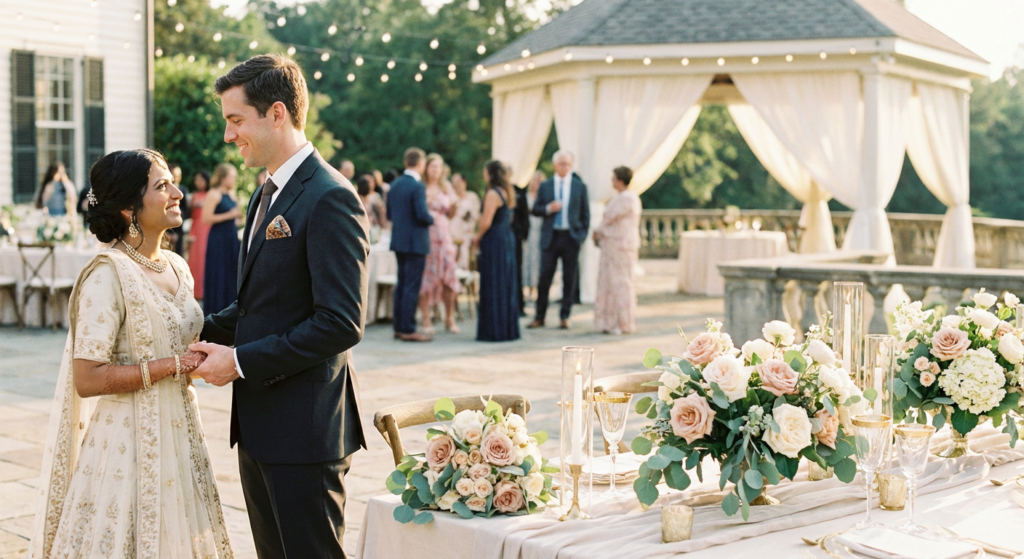
Multicultural wedding planning requires intentional coordination across traditions, family expectations, and vendor logistics—and when you’re managing a demanding career or planning from another state, the complexity multiplies quickly.
Whether you’re blending South Asian and Southern traditions, honoring Hispanic heritage alongside Black American customs, or weaving together multiple cultural threads into one celebration, the process demands more than a standard wedding timeline. It requires a planner who understands the nuance of ceremony structures, the significance of specific rituals, and how to communicate those needs clearly to your vendor team. Belle Leroux specializes in this exact intersection—bringing healthcare-honed systems thinking to the art of multicultural celebration design, serving couples throughout the Atlanta metro, North and Middle Georgia, Chattanooga, and beyond.
Understanding the Scope of Multicultural Wedding Planning
Multicultural weddings aren’t simply about adding cultural elements to a traditional format. They’re about designing an experience that authentically represents both partners and their families while maintaining flow, timing, and guest experience.
This means coordinating:
- Multiple ceremony structures (religious, cultural, or civil)
- Distinct attire changes and timing considerations
- Specialized vendors who understand cultural requirements
- Family dynamics across different planning expectations
- Menu design that honors dietary traditions and restrictions
- Décor that reflects heritage without feeling costume-like
- Music programming that moves between cultural moments seamlessly
The planning process itself becomes more layered. You’re not just booking vendors—you’re educating them, building run-of-show documents that account for ritual timing, and creating contingency plans for elements that may be unfamiliar to your venue or coordination team.
How to Start Your Multicultural Wedding Planning Process
Define Your Cultural Priorities as a Couple
Before reaching out to vendors or venues, sit down together and identify which traditions are non-negotiable, which are flexible, and which you’re comfortable adapting or skipping entirely.
Create a shared document that outlines:
- Ceremony elements each partner wants to include
- Family expectations you’re committed to honoring
- Rituals that require specific vendors, materials, or timing
- Cultural aspects you want woven into décor, menu, or music
This becomes your planning compass. When decisions get complicated or family input intensifies, you’ll have a reference point you built together.
Research Planners Who Specialize in Multicultural Celebrations
Not every planner has experience coordinating across cultural traditions. Look for portfolios that demonstrate actual multicultural work—not just diverse couples, but evidence of integrated cultural elements.
Ask potential planners:
- What multicultural weddings have you coordinated, and what traditions were involved?
- How do you approach vendor education when rituals are unfamiliar to the team?
- What’s your process for managing family dynamics across different cultural expectations?
- How do you build timelines when multiple ceremonies or significant attire changes are involved?
The right planner won’t just say they’re comfortable with your traditions—they’ll ask detailed questions about timing, family structure, and ritual requirements during your first conversation.
Building Your Vendor Team for a Multicultural Wedding in Newnan and Beyond
Prioritize Vendors Who Demonstrate Cultural Competence
Your photographer needs to understand the key moments in both cultural ceremonies. Your caterer should be equipped to execute authentic dishes, not approximations. Your hair and makeup artist must have experience with diverse hair textures and skin tones.
During vendor interviews, share your cultural priorities upfront. Notice whether they ask clarifying questions, express genuine interest, or default to generic responses. The vendors who lean in with curiosity and specific follow-up questions are the ones who’ll execute your vision with care.
Communicate Ritual Requirements Clearly
Create a detailed overview of each cultural element for your vendor team. Include:
- The name and significance of each ritual
- Timing and sequence within the ceremony
- Required materials, setup, or positioning
- Key moments for photography or videography
- Any restrictions (no shoes, specific coverage requirements, etc.)
This documentation becomes part of your planning system. Your planner should integrate it into the master timeline, venue layout, and day-of coordination materials so every vendor operates from the same informed foundation.
Designing the Guest Experience Across Cultural Moments
Create Seamless Transitions Between Traditions
Guests shouldn’t feel like they’re attending two separate events. The design, flow, and hospitality should create continuity even as cultural moments shift.
Consider:
- Program inserts that explain the significance of rituals for guests unfamiliar with certain traditions
- Music transitions that bridge cultural moments naturally
- Décor that blends visual elements rather than segregating them by tradition
- Cocktail hour positioning that allows for attire changes without disrupting guest experience
- Seating arrangements that honor family structures while encouraging cross-cultural connection
Your planner’s role here is critical—they’re choreographing an experience that feels cohesive to guests while honoring the distinct significance of each tradition for you and your families.
Plan for Extended Timelines
Multicultural weddings often require more time than standard formats. Multiple ceremonies, attire changes, and extended family photo sessions all impact your timeline.
Build in buffer time between major segments. If your ceremony runs long because a ritual takes more time than anticipated, you want flexibility built into the schedule rather than a domino effect that compresses the rest of your reception.
Managing Family Dynamics and Expectations
Family involvement often intensifies in multicultural planning. Different cultures have different expectations around decision-making authority, financial contribution, and event structure.
Establish communication protocols early:
- Decide which decisions you’ll make as a couple versus which include family input
- Designate a point person (often your planner) for vendor communication so families aren’t reaching out independently
- Schedule regular family check-ins so concerns are addressed proactively rather than surfacing last-minute
- Create space for family traditions while maintaining boundaries around your vision
Your planner should function as a buffer and translator—helping you honor family input while keeping the planning process moving forward on your timeline.
Working with a Multicultural Wedding Planner
Multicultural wedding planning requires a planner who brings both cultural awareness and operational precision. You need someone who can hold the complexity of multiple traditions while managing the logistics that make everything executable.
The right planning partner will:
- Build customized timelines that account for your specific cultural elements
- Educate your vendor team so you’re not repeating explanations
- Anticipate logistical challenges before they become problems
- Communicate with your families in a way that honors their involvement while protecting your vision
- Coordinate day-of execution so rituals happen correctly, on time, and with the reverence they deserve
This isn’t about finding a planner who’s personally familiar with every tradition—it’s about finding someone who approaches unfamiliar elements with respect, asks the right questions, and builds systems that ensure nothing gets missed.
Your Next Step: Start the Conversation
Multicultural wedding planning works best when you have a partner who understands the stakes—not just the logistics, but the meaning behind every ritual, the family dynamics at play, and the experience you’re creating for the people you love most.
If you’re planning a celebration that honors multiple heritages and you want a planner who’ll own the process from engagement to sendoff, let’s talk about your vision. We’ll walk through your cultural priorities, your timeline, and how we can bring it all together with the precision and care your celebration deserves.
FAQ
How far in advance should we start planning a multicultural wedding?
Multicultural weddings benefit from extended planning timelines—ideally 12 to 18 months. This allows time to research specialized vendors, coordinate across family expectations, and build detailed timelines that account for multiple ceremonies or cultural elements. If you’re planning from out of state or need vendors with specific cultural expertise, the additional lead time becomes even more valuable.
What if our families have conflicting expectations about wedding traditions?
This is where your planner becomes essential. A skilled multicultural wedding planner helps facilitate conversations, identify compromise points, and design solutions that honor both families without requiring you to choose sides. The key is establishing your priorities as a couple first, then working with your planner to communicate those decisions in a way that respects family input while maintaining your vision.
Do we need to hire vendors from our specific cultural backgrounds?
Not necessarily, but you do need vendors who demonstrate cultural competence and willingness to learn. Some elements—like specific cuisine or traditional attire—may require vendors with direct experience. For others, what matters most is that vendors approach your traditions with respect, ask informed questions, and take direction seriously. Your planner should vet vendors for this competence during the selection process.