

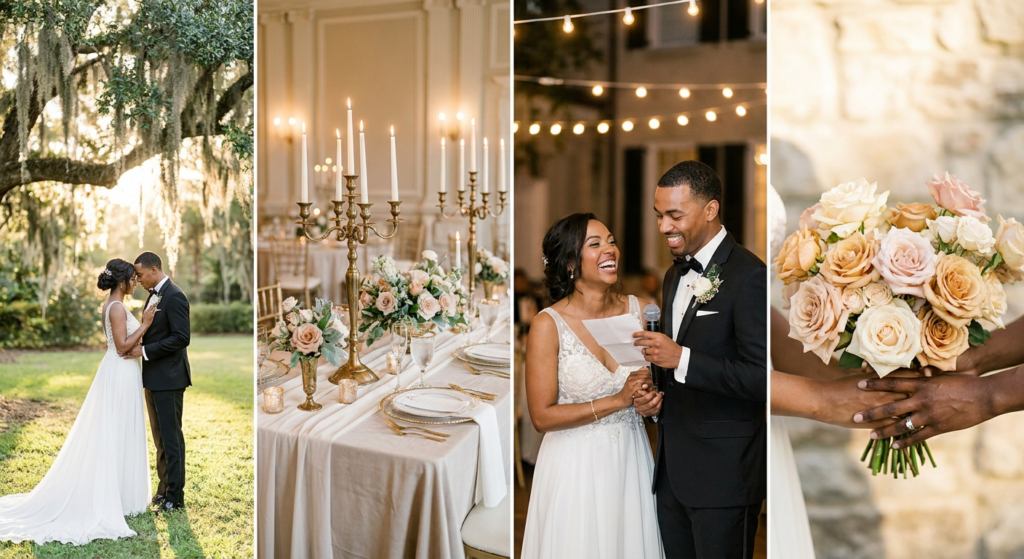
Every couple deserves a wedding celebration that reflects their love story, honors their heritage, and unfolds without requiring them to become project managers in the process.
Full wedding planning exists for exactly this reason—to give busy professionals the freedom to enjoy their engagement while a dedicated expert orchestrates every detail from venue selection to final sendoff. For couples in Newnan, GA and throughout the Atlanta metro area, this comprehensive service transforms what could be months of vendor research, contract negotiation, and timeline coordination into a seamless experience guided by someone who understands both the logistics and the meaning behind every tradition.
What Full Wedding Planning Actually Includes
Full wedding planning—sometimes called full-service planning—means your planner joins your journey from the earliest stages of engagement through the last dance at your reception. This isn’t coordination that begins a few weeks before your date. It’s a partnership that typically spans 12-18 months.
The scope includes:
- Venue research, site visits, and contract negotiation
- Budget development and expense tracking throughout planning
- Vendor sourcing, vetting, and management (catering, photography, florals, entertainment, rentals, and more)
- Design concept development that honors cultural elements and personal style
- Timeline creation for both the planning process and wedding day itself
- Guest list management and invitation coordination
- Ceremony planning, including cultural or religious customs
- Reception flow design and logistics
- Rehearsal coordination
- Complete day-of execution with on-site team
This level of service means you have a dedicated professional who knows your vision, understands your family dynamics, and owns the responsibility of bringing everything together.
Who Benefits Most from Full Wedding Planning in Newnan
Certain couples find full planning not just helpful but essential. Physicians finishing residencies, attorneys building their practices, and corporate executives managing teams often lack the bandwidth to vet vendors or negotiate contracts during business hours. When both partners work demanding jobs, wedding planning becomes another project competing for limited evening and weekend time.
Full planning solves specific challenges:
For out-of-state couples: Planning a celebration in Georgia while living in Colorado or another state requires a local expert who can visit venues, meet vendors face-to-face, and handle logistics you can’t manage remotely.
For multicultural celebrations: When your wedding honors South Asian, Black, Hispanic, or mixed-heritage traditions—or blends multiple cultures—you need a planner who respects these customs and knows how to integrate them authentically throughout your ceremony and reception.
For couples without planning experience: If you’ve never hired a caterer, designed a floor plan, or built a wedding timeline, the learning curve is steep. Full planning means you benefit from your planner’s expertise without becoming an expert yourself.
For those who value their time: The average couple spends 200+ hours planning their wedding. Full planning returns those hours to you.
The Full Wedding Planning Process: What to Expect
Understanding how this service unfolds helps you evaluate whether it matches your needs.
Initial Consultation and Contract
Your relationship begins with a discovery conversation where your planner learns about your vision, cultural traditions, family dynamics, and non-negotiables. Belle Leroux approaches this phase with the same systematic thinking that comes from a healthcare background—asking the right questions to understand not just what you want, but why it matters.
Once you move forward, you’ll receive a detailed contract outlining services, timeline, and investment.
Budget and Venue Selection
Your planner develops a realistic budget allocation based on your priorities, then begins venue research. This phase includes site visits (with you when possible, or on your behalf if you’re planning remotely), comparison of contracts, and negotiation of terms. The venue decision shapes everything that follows, so this foundation matters enormously.
Vendor Curation and Booking
Rather than scrolling through hundreds of vendor websites, you receive curated recommendations based on your style, cultural needs, and budget parameters. Your planner handles initial outreach, collects proposals, and presents options with guidance on what to consider. Once you make selections, they manage contracts and serve as the primary point of contact throughout planning.
Design Development
This is where your celebration’s visual and experiential elements take shape. Your planner creates a design concept that weaves together your cultural heritage, personal style, and venue aesthetic. This includes color palettes, floral direction, lighting plans, and rental selections.
Timeline and Logistics Management
Months before your wedding, your planner builds a comprehensive timeline that coordinates vendor arrivals, ceremony elements, reception flow, and family photos. They also create contingency plans for weather or unexpected changes. This systems-level thinking ensures nothing falls through the cracks.
Rehearsal and Wedding Day Execution
Your planner runs your rehearsal, ensuring the wedding party understands their roles and timing. On the wedding day itself, they arrive early to oversee setup, manage vendors, troubleshoot issues, and keep everything on schedule. You experience your celebration as a guest at your own wedding—present, not managing.
How Full Wedding Planning Differs from Partial Planning and Coordination
The terminology can be confusing, so clarity helps.
Full wedding planning begins at engagement and includes all vendor sourcing, design development, and planning tasks.
Partial planning (sometimes called “month-of plus”) starts 3-6 months before the wedding. You’ve already booked major vendors, but need help with final details, timeline creation, and day-of management.
Day-of coordination begins 2-4 weeks before your date. You’ve planned everything; the coordinator executes your existing plan.
For couples who want comprehensive support and don’t have time to manage the planning process themselves, full wedding planning provides the most complete solution.
Investment Considerations for Full Wedding Planning
Full planning represents a significant investment, typically ranging from 15-20% of your overall wedding budget. For a $75,000 wedding, expect planning fees between $11,000-$15,000. For a $150,000 celebration, fees may reach $22,000-$30,000.
This investment covers 12-18 months of expertise, vendor relationships that often result in better pricing or priority service, unlimited communication, and the peace of mind that comes from knowing a professional owns the process.
Many couples initially hesitate at the investment, then realize the value when they consider the alternative: spending hundreds of hours researching vendors they’ve never worked with, negotiating contracts without industry knowledge, and managing logistics while working full-time demanding careers.
Questions to Ask When Selecting Your Full Wedding Planner
Not all planners offer the same experience. These questions reveal whether you’ve found the right fit:
- How many weddings do you take per year, and how many are full planning clients?
- What’s your experience with [specific cultural traditions important to you]?
- How do you handle communication—response times, preferred methods, availability?
- Can you share examples of how you’ve solved unexpected challenges?
- What does your day-of team structure look like?
- How do you approach budget management and expense tracking?
The answers should demonstrate both competence and compatibility. You’re entering a long-term partnership—trust and communication style matter as much as experience.
Why Multicultural Couples Choose Full Planning
When your wedding honors multiple cultural traditions, the planning complexity multiplies. A South Asian ceremony might include mehndi, sangeet, and traditional Hindu or Sikh rituals. A Black couple might incorporate jumping the broom, libation ceremonies, or specific music traditions. Hispanic celebrations often include lazo, arras, or specific reception customs.
Full planning ensures these elements receive proper attention, timing, and integration. Your planner researches what each tradition requires, coordinates with cultural vendors or officiants, and builds these moments into your timeline with appropriate reverence.
This matters especially when families have different expectations or when you’re blending traditions from different backgrounds. Your planner becomes the bridge, ensuring everyone feels honored while maintaining your vision as the couple.
Making the Decision: Is Full Wedding Planning Right for You?
Consider full planning if:
- You’re 12+ months from your wedding date
- You haven’t booked vendors yet (or have only secured your venue)
- You work demanding hours and value your limited free time
- You’re planning from out of state
- Your celebration includes cultural traditions requiring specialized knowledge
- You want expert guidance on budget allocation and vendor selection
- You prefer delegating rather than DIY-ing
This service isn’t about lacking capability—it’s about strategic delegation. The same professional judgment that makes you successful in your career applies here: recognizing when to bring in specialized expertise so you can focus on what matters most.
Frequently Asked Questions
When should we hire a full wedding planner?
The ideal time is within 2-3 months of your engagement, especially if your wedding date is 12-18 months away. This timing allows your planner to guide venue selection and vendor booking during peak availability. However, planners can join your process at any stage—even if you’ve already booked a venue, full planning still provides comprehensive support for all remaining decisions.
Can a full wedding planner work with our cultural traditions?
Experienced planners absolutely can and should honor your cultural heritage. During your consultation, discuss specific traditions, rituals, or customs important to your families. Ask to see portfolio examples of multicultural weddings they’ve planned. The right planner will research unfamiliar traditions, connect you with appropriate cultural vendors, and integrate these elements authentically throughout your ceremony and reception.
What if we’ve already booked some vendors—can we still get full planning?
Yes, though the service may be adjusted to reflect the work already completed. Many planners offer modified full planning that picks up where you are in the process. Be transparent about which vendors you’ve booked and what contracts you’ve signed. Your planner will review existing agreements, integrate those vendors into the overall plan, and handle all remaining sourcing and coordination.
Ready to reclaim your engagement and trust the process to someone who understands both the logistics and the meaning behind every detail? Belle Leroux brings systematic expertise and cultural sensitivity to every celebration, ensuring your wedding honors your heritage while giving you the freedom to actually enjoy planning. Start the conversation today and discover what full wedding planning can mean for your celebration.