
Every couple deserves a celebration that reflects not just their love story, but the rich cultural heritage that shaped who they are—and that’s where intentional wedding design becomes essential.
Wedding design goes far beyond selecting a color palette or arranging centerpieces. It’s the strategic art of weaving together visual storytelling, cultural authenticity, and logistical precision to create a cohesive celebration that honors your traditions while reflecting your personal style. For multicultural couples planning celebrations in Newnan, GA and beyond, this approach ensures every element—from ceremony rituals to reception details—works in harmony to tell your unique story.
What Wedding Design Actually Encompasses
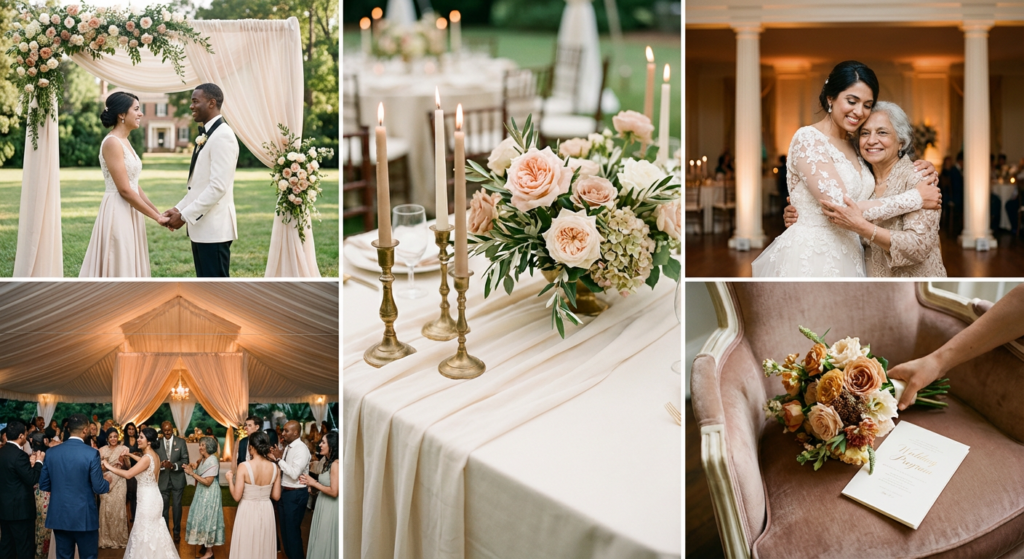
Wedding design is the comprehensive visual and experiential framework for your entire celebration. While décor focuses on individual elements, design considers how every component interacts to create a unified guest experience.
A complete wedding design strategy includes:
- Ceremony and reception aesthetics that honor cultural traditions while maintaining visual cohesion
- Color theory and palette development that works across multiple events (welcome dinner, ceremony, reception)
- Spatial planning that accommodates specific cultural rituals and guest flow
- Lighting design that transforms venues and highlights key moments
- Textile and material selection that reflects heritage elements authentically
- Signage and paper goods that guide guests through multicultural celebrations
- Floral and botanical concepts that incorporate meaningful cultural symbolism
This holistic approach ensures that when your Hindu ceremony transitions to your reception, or when your traditional tea ceremony flows into cocktail hour, the visual narrative remains intentional and connected.
Why Multicultural Couples Need Strategic Wedding Design
When you’re blending traditions from different cultures, the design becomes your visual translator. It’s what helps guests from various backgrounds understand the significance of each ritual while creating an atmosphere that feels cohesive rather than disjointed.
Cultural authenticity requires research and intentionality. Incorporating elements like a mandap, jumping the broom, or a traditional hora isn’t just about placing items in a space—it’s about understanding their significance and designing around them with respect. This means working with a planner who invests time in learning what these traditions mean to your family and how to honor them properly.
Logistical complexity demands systems thinking. Multicultural weddings often involve multiple outfit changes, varied ceremony lengths, and different guest expectations around timing and participation. Your design must account for these operational realities. Where will the couple change between ceremonies? How does lighting need to shift for different cultural moments? These aren’t afterthoughts—they’re core design considerations.
Wedding Design for Atlanta Metro and Destination Celebrations
For couples planning from out of state or coordinating celebrations across multiple locations, wedding design becomes even more critical. You need a planner who can translate your vision across different venues and geographic contexts while maintaining consistency.
Belle Leroux specializes in creating design frameworks that work whether you’re celebrating at a North Georgia vineyard, a historic Atlanta venue, or a destination location in Colorado. This flexibility comes from establishing clear design principles early—your color story, cultural elements, and aesthetic direction—then adapting them to each specific environment.
Remote planning requires visual communication systems. When you can’t visit your venue repeatedly, your planner needs to provide detailed renderings, spatial mockups, and clear visual documentation. This process-driven approach, informed by healthcare systems thinking, ensures nothing gets lost in translation between your vision and execution day.
The Wedding Design Process: From Concept to Execution
Effective wedding design follows a structured progression that protects both your vision and your timeline.
Discovery and Cultural Consultation
The process begins with understanding not just your aesthetic preferences, but the cultural significance behind your celebration choices. This phase involves:
- Detailed conversations about family traditions and non-negotiable cultural elements
- Identifying which traditions you want to honor and how prominently
- Understanding guest demographics and cultural literacy levels
- Establishing design priorities that reflect both partners’ heritages
Concept Development and Mood Boarding
Once cultural requirements are clear, the design concept takes shape through:
- Curated mood boards that blend cultural authenticity with contemporary aesthetics
- Color palette development that works across multiple events and lighting conditions
- Material and textile selection that incorporates traditional elements
- Spatial planning that accommodates specific rituals and guest flow patterns
Vendor Collaboration and Design Execution
Your planner becomes the central communication hub, ensuring every vendor understands their role in the larger design vision. This includes coordinating with florists about culturally significant botanicals, briefing rental companies on setup requirements for traditional ceremonies, and ensuring photographers understand which design elements and cultural moments require documentation.
On-Site Design Management
Design doesn’t end with planning—it requires on-site execution and real-time problem-solving. This means overseeing setup to ensure cultural elements are positioned correctly, adjusting lighting as natural light changes, and managing transitions between different ceremony styles seamlessly.
Investment Considerations for Comprehensive Wedding Design
Wedding design represents a significant portion of your overall celebration investment, typically ranging from 15-25% of your total budget depending on complexity and scale.
What drives design investment:
- Number of cultural traditions being incorporated and their setup requirements
- Venue transformation needs (raw spaces require more design investment)
- Guest count and spatial requirements
- Floral and botanical complexity
- Custom elements like specialty linens, furniture, or cultural décor pieces
- Lighting design and technical requirements
For multicultural celebrations, the investment often trends higher because you’re essentially designing multiple cohesive experiences rather than one single aesthetic. However, this investment protects you from cultural missteps, logistical failures, and the visual disconnect that happens when traditions are incorporated without intentional design.
How Wedding Design Protects Your Peace of Mind
For working professionals managing demanding careers, the value of wedding design extends beyond aesthetics—it’s about reclaiming your time and mental energy.
Vendor vetting becomes streamlined. Your planner identifies vendors experienced with multicultural celebrations who understand the cultural significance of your traditions. This eliminates the exhausting process of educating every vendor about your requirements.
Decision fatigue decreases dramatically. Instead of evaluating thousands of individual choices, you’re making strategic decisions within a clear design framework. Should you choose option A or B? Your design concept provides the answer.
Cultural representation happens authentically. You’re not guessing whether elements are appropriate or worrying about unintentional disrespect. Your planner researches, consults, and ensures traditions are honored correctly.
Frequently Asked Questions
How far in advance should we start the wedding design process?
Begin design conversations 10-12 months before your celebration date, especially for multicultural weddings. This timeline allows for proper cultural research, custom element sourcing, and vendor coordination. Couples planning from out of state benefit from starting even earlier to accommodate site visits and remote collaboration needs.
Can wedding design incorporate multiple cultural traditions without looking chaotic?
Absolutely—when approached strategically. The key is establishing a cohesive visual thread (color palette, material consistency, intentional transitions) that connects different cultural elements. Professional wedding design creates visual harmony while maintaining the distinct identity of each tradition, ensuring guests experience a unified celebration rather than disconnected segments.
What’s the difference between a wedding designer and a wedding planner who offers design services?
A standalone wedding designer focuses primarily on aesthetics and may hand off logistics to a separate coordinator. A planner offering comprehensive design services—like Belle Leroux—integrates design with full-service planning, ensuring your vision is both beautiful and operationally sound. This integrated approach is particularly valuable for multicultural celebrations where cultural elements have both aesthetic and logistical implications.
Ready to create a celebration that honors your heritage with sophisticated, intentional design? Belle Leroux brings systems-driven planning and cultural sensitivity to every celebration, ensuring your multicultural wedding reflects both partners authentically. Start your planning journey here and experience what happens when design meets cultural expertise.