

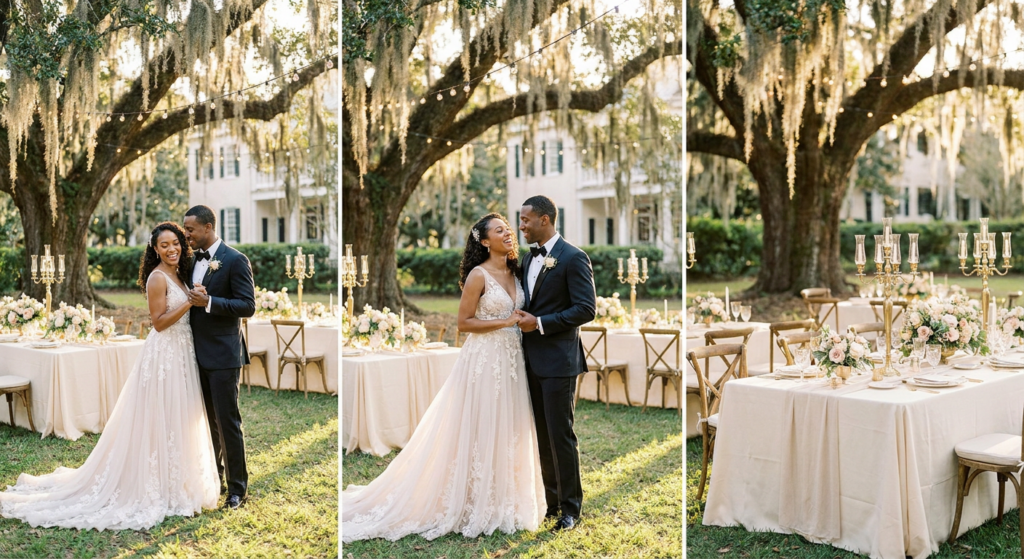
When Sarah and Marcus reached out six months before their wedding, they’d already booked their venue and secured a photographer—but the mounting vendor emails, unanswered questions, and timeline confusion were consuming their evenings and weekends. As a pediatric surgeon and corporate finance director, they needed someone to step in, organize what they’d started, and carry them confidently to the finish line. That’s exactly what partial wedding planning delivered.
What Partial Wedding Planning Looks Like in Action
Sarah and Marcus represent a growing segment of couples who begin wedding planning independently, then realize they need professional support before things spiral. They’d chosen a historic estate venue in Newnan and fallen in love with a photographer whose portfolio captured their vision. What they hadn’t anticipated was the operational complexity that followed: coordinating vendor arrival times, designing a ceremony flow that honored Marcus’s Ghanaian heritage alongside Sarah’s Southern traditions, and managing the detailed timeline that would keep 180 guests moving seamlessly through the day.
Belle Leroux entered their planning process at the six-month mark. The couple had completed approximately 40% of their vendor bookings but lacked the connective tissue that transforms individual contracts into a cohesive celebration. Partial wedding planning bridges this gap—providing full-service coordination and planning support from the point of engagement through the final sendoff, without starting from scratch.
The Scope: What Gets Handled Under Partial Planning
For Sarah and Marcus, partial planning included:
Vendor Coordination & Completion
- Reviewed existing contracts for gaps and timeline conflicts
- Sourced and vetted remaining vendors: caterer, florist, DJ, day-of stationery, and cake designer
- Negotiated service agreements and managed all vendor communication through wedding day
Cultural Integration & Ceremony Design
- Collaborated with the couple to weave Ghanaian kente cloth, libation ceremony, and jumping the broom into the program
- Coordinated with officiant on ceremony script and cultural explanations for guests
- Designed a reception entrance that honored both families’ traditions
Timeline Development & Logistics Management
- Built a comprehensive wedding day timeline distributed to all vendors
- Coordinated load-in/load-out schedules to prevent venue overlap
- Managed rehearsal and day-of execution with on-site coordination team
Design Consultation & Styling Support
- Refined the couple’s vision into actionable design specs for florist and rental company
- Sourced specialty linens and chargers that elevated their tablescape
- Created a cohesive aesthetic across ceremony, cocktail hour, and reception spaces
Why Couples Choose Partial Over Full-Service or Day-Of
The decision point usually comes down to timing and control. Couples who’ve already invested time in vendor research don’t want to abandon that work, but they recognize they lack the bandwidth or expertise to manage the operational execution. They’re past the point where month-of coordination feels sufficient, yet they don’t need—or want to pay for—full-service planning from engagement forward.
Sarah described it this way: “We wanted ownership over the big creative decisions, but we needed someone who could translate our ideas into logistics and manage the details we didn’t even know existed.”
Partial wedding planning offers that middle ground. It assumes the couple has made foundational decisions—venue, date, general aesthetic—and steps in to professionalize the process. It’s particularly effective for:
- Couples planning from out of state who need local expertise and vendor relationships
- Professionals with limited time for weekday calls and site visits
- Multicultural celebrations requiring cultural competency and intentional design
- Anyone who’s started planning but feels overwhelmed by the volume of moving parts
The Partial Wedding Planning Process in Newnan
Every partial planning engagement begins with an intake process designed to understand what’s been completed, what’s outstanding, and where the couple needs the most support. For Sarah and Marcus, the first month focused on vendor completion and contract review. Month two shifted to design refinement and cultural ceremony planning. Months three through five centered on timeline development, final details, and vendor confirmations. The final weeks included rehearsal coordination and day-of execution.
Throughout the process, communication happened via a shared planning portal, biweekly check-in calls, and responsive email support. The couple never wondered where things stood or what needed their attention next—the system kept everyone aligned.
On wedding day, the Belle Leroux team arrived early to manage vendor load-in, oversee setup, coordinate the ceremony processional, troubleshoot a last-minute sound issue, and ensure the reception timeline flowed without the couple lifting a finger. Sarah and Marcus experienced their celebration as guests, not project managers.
The ROI: Time, Expertise, and Peace of Mind
The return on partial planning isn’t just measured in hours saved—though Sarah estimated they reclaimed 60+ hours in the final three months alone. The value also lives in:
- Vendor relationships: Access to trusted professionals and preferred pricing
- Cultural competency: A planner who researches, respects, and elevates heritage traditions
- Risk mitigation: Someone who spots timeline conflicts, contract gaps, and logistical issues before they become problems
- Execution confidence: Knowing an experienced team owns the day-of logistics
For high-earning professionals, the cost of partial planning often pales in comparison to the opportunity cost of spending evenings managing vendor emails instead of focusing on their careers—or simply enjoying their engagement.
When to Bring in a Partial Planner
The ideal window is 4–8 months before the wedding date. This provides enough runway to complete vendor bookings, refine design, and build a detailed timeline without rushing. That said, partial planning can be adapted for shorter timelines if the couple has already made significant progress on vendor selection.
Red flags that signal it’s time to bring in support:
- Vendor emails are going unanswered for days or weeks
- You’re unclear on what questions to ask or what details matter
- Cultural or logistical elements feel too complex to coordinate alone
- The process is causing tension between partners or families
- You’re losing sleep over timeline logistics
Frequently Asked Questions
What’s the difference between partial planning and month-of coordination?
Partial planning begins 4–8 months before the wedding and includes vendor sourcing, contract review, design consultation, and full timeline development. Month-of coordination (often called day-of coordination) typically starts 4–6 weeks out and focuses solely on executing a plan the couple has already created. Partial planning is appropriate when you need help finishing and refining your vendor team and design, not just managing the final details.
Can a partial planner help with cultural or multicultural weddings?
Yes. Partial planning is particularly valuable for couples incorporating multiple cultural traditions, as it requires intentional ceremony design, vendor coordination, and often education for officiants and other service providers. A planner experienced in multicultural celebrations will research your traditions, coordinate with cultural vendors (such as drummers, dancers, or specialty caterers), and ensure your heritage is honored authentically throughout the day.
How much does partial wedding planning typically cost?
Investment varies based on wedding size, complexity, location, and the scope of services required. Partial planning generally falls between month-of coordination and full-service planning. During an initial consultation, planners assess what’s been completed, what’s outstanding, and what level of support you need—then provide a tailored proposal. Most couples find the investment pays for itself in time saved, vendor discounts, and avoided mistakes.
Ready to Hand Off the Details?
If you’ve started planning but need a professional to organize, refine, and execute the vision you’ve begun building, partial wedding planning might be exactly what your timeline needs. Belle Leroux specializes in stepping into the process at any stage—bringing systems, cultural competency, and calm to couples who need support without starting over.
Schedule your consultation to discuss where you are in the planning process and how we can carry you to a flawlessly executed celebration.